Thermal cameras are often treated like thermometers. They aren't. They measure infrared energy, and turn it into temperature using assumptions about the surface and the conditions. Get those wrong and the numbers are wrong too.
What a thermal camera measures
Every surface gives off infrared energy that depends on its temperature. The camera measures that energy, but the energy also depends on:
- Emissivity: how well the surface gives off infrared, from 0 to 1. Matte surfaces like paint, roofing and soil are high, around 0.9 to 0.95. Bare shiny metal is low, sometimes under 0.1.
- Reflected temperature: what the surface reflects from its surroundings, often the sky.
- Distance and air: humidity and distance absorb some of the signal.
Why shiny metal lies
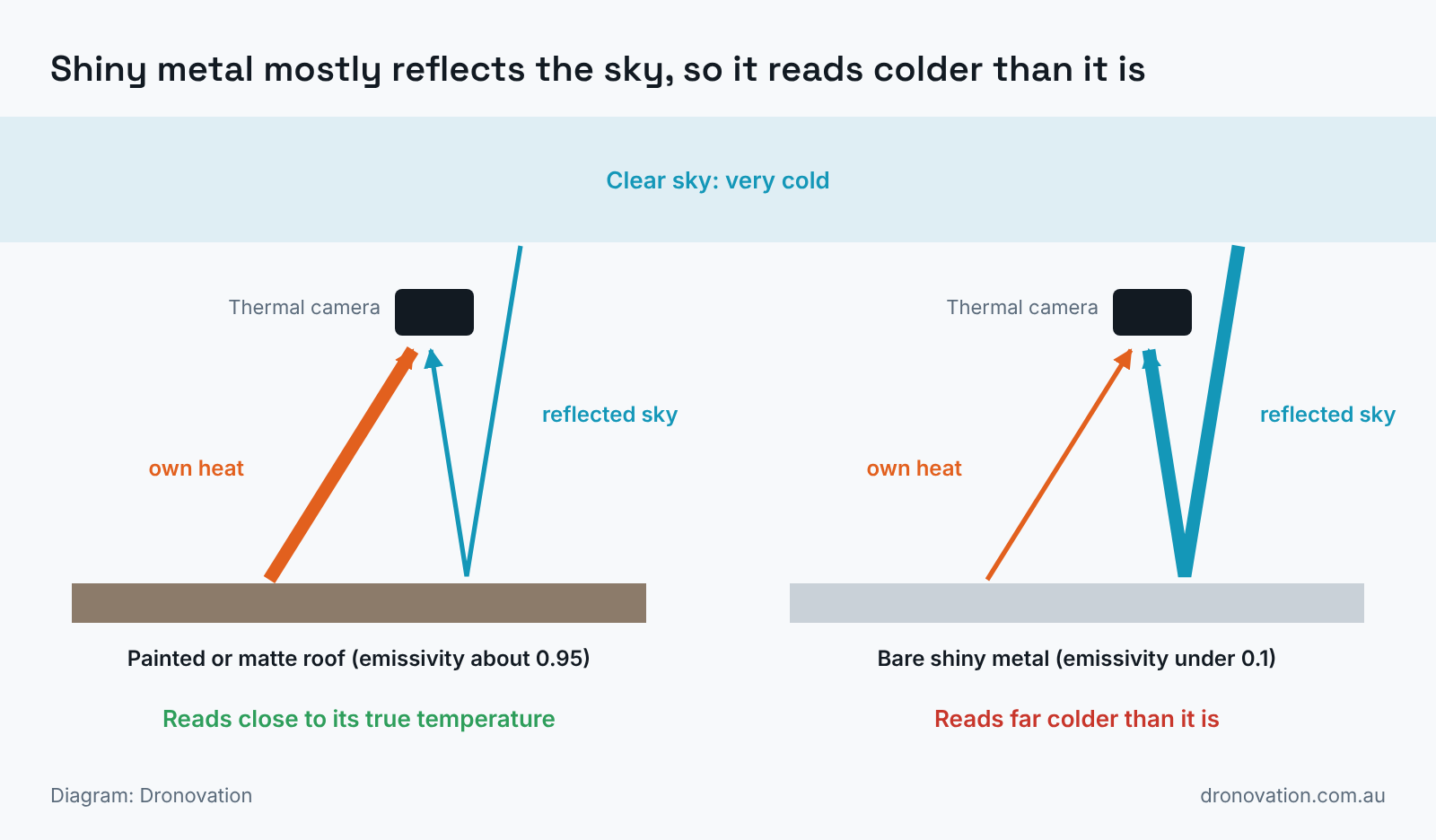
A low-emissivity surface gives off little of its own heat and reflects a lot of its surroundings. A clean metal roof under a clear sky can read far colder than it really is, because it's mostly reflecting the cold sky. Don't trust absolute temperatures on bare metal or glass.
Radiometric or not
A radiometric camera stores a temperature for every pixel, so you can analyse the image later and adjust settings. A non-radiometric camera only gives a coloured picture. For inspection reports, use radiometric images.
Relative vs absolute
Most inspection work is relative: looking for a spot that's warmer or cooler than similar spots nearby. That works even if the settings are a bit off. Quote absolute temperatures only when emissivity, reflected temperature and distance are set correctly and checked against a reference.
Conditions that matter
- Sun and time of day. Solar panels need full sun; roof moisture shows best after sunset.
- Wind cools surfaces unevenly.
- Rain and dew make everything read the same.
- Reflections. If a hotspot moves when you move, it's a reflection.
Common mistakes
- Using default settings for every surface
- Changing the colour palette or temperature range between images, so they can't be compared
- Calling a reflection a defect
- Reporting a temperature to one decimal place as if it were exact
Good thermal work is mostly good planning. The camera is the easy part.