AI is good at writing summaries. It's less good at numbers. A language model can confidently state that yield is down 12% when the data says 7%, because it predicts plausible text, not correct arithmetic. For anything a business acts on, that's a serious problem. Here's how to design around it.
Why AI gets numbers wrong
- It generates text one piece at a time, based on patterns, not by calculating
- It can mix up figures from different parts of its input
- It fills gaps with plausible values when data is missing
- It rarely says "I don't know" unless designed to
The fix: compute first, then write
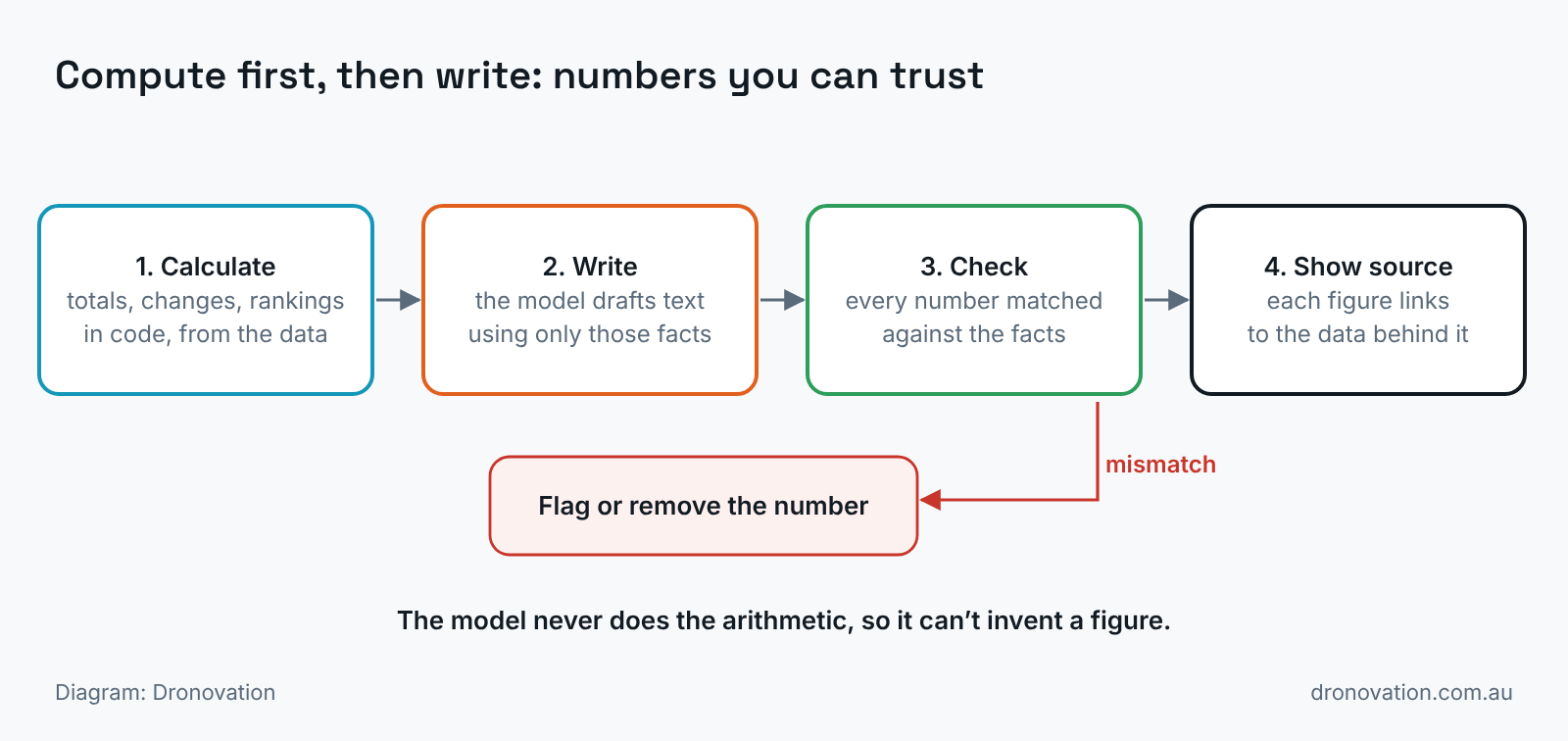
The most reliable pattern separates calculation from writing:
- Calculate the facts in code. Totals, changes, averages and rankings are computed directly from the data.
- Give the model only those facts. The model writes the summary using the computed values.
- Check the output. Every number in the text is matched against the computed facts. Any number that doesn't match is flagged or removed.
- Show the source. Each figure links back to the data behind it.
Other good practices
- Say what's missing. If data for a paddock or site is missing, the report should say so, not guess.
- Keep units explicit: hectares, tonnes, degrees.
- Round sensibly. Reporting to one decimal place implies precision the data may not have.
- Test with known answers. Run the system on data where you know the right summary.
- Keep people in the loop for reports that go to clients or drive spending.
In practice
In Lumina Fields, the AI writes the words, but every number in a summary comes from a computed fact and is checked before it's shown. If a number can't be matched, it doesn't appear. It's a simple rule that makes AI summaries safe to act on.