Every digital project hits the same question early: buy a product, configure a platform, or build something custom? The wrong answer is expensive either way. Here's a practical way to decide.
The three options
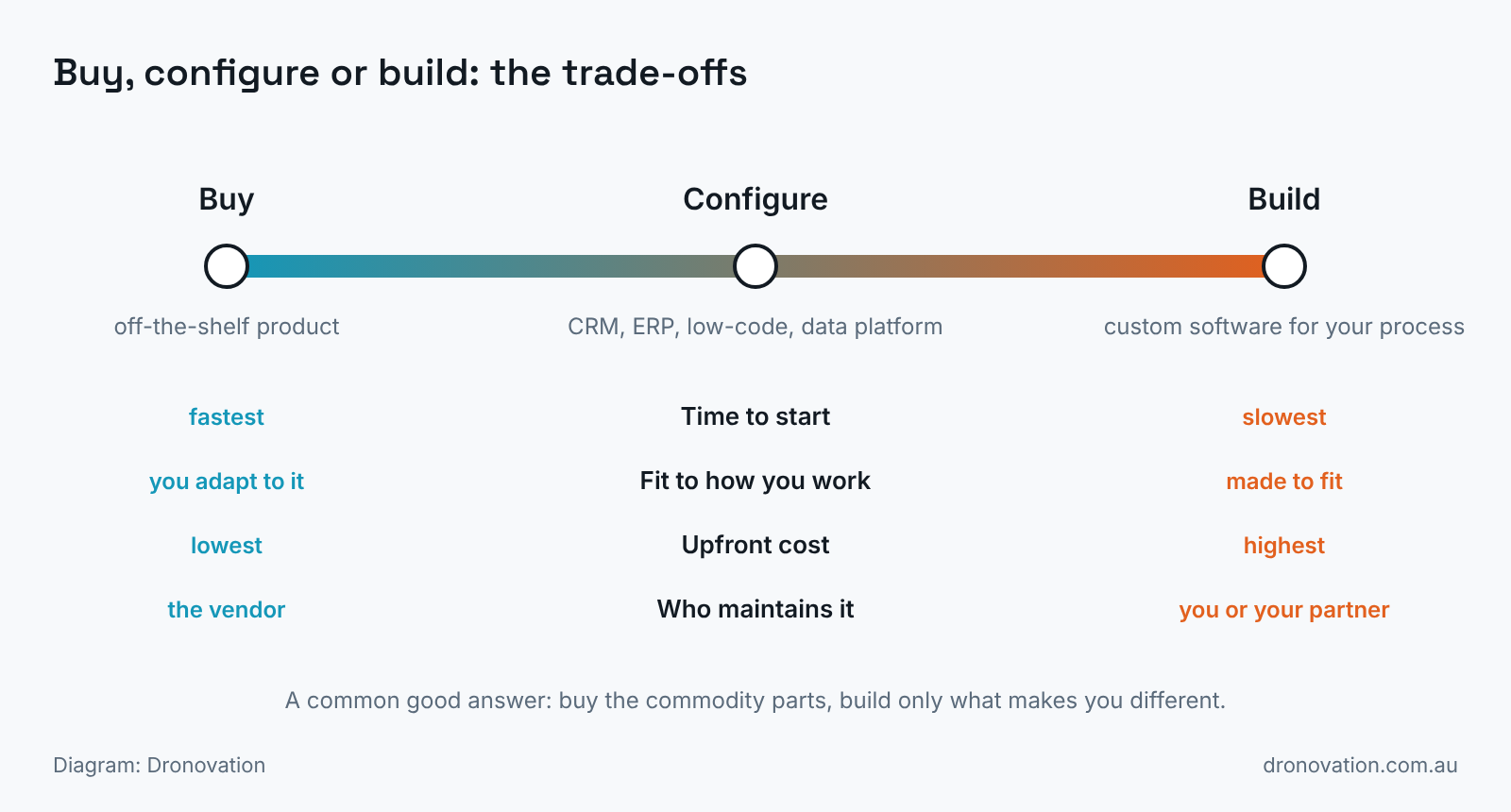
Buy: an off-the-shelf product, used mostly as it comes. Configure: a platform (CRM, ERP, low-code, data platform) set up for your needs. Build: custom software designed for your process.
When to buy
- The process is common across your industry (payroll, accounting, standard field service)
- Good products exist and are widely used
- You'd rather change your process than maintain software
- Speed matters more than fit
When to configure
- A platform covers most needs and can be adapted
- You have people who can own the configuration
- You want flexibility without writing much code
When to build
- The process is what makes your business different
- No product fits without heavy workarounds
- You need to integrate tightly with other systems
- You can fund ongoing maintenance, not just the first version
Questions to ask
- What does the process look like today, step by step? Many projects fail because nobody wrote this down.
- What's the total cost over five years? Licences, setup, integration, support, changes and staff time.
- Who will own it? Someone must be responsible after go-live.
- How will it connect to the systems you keep?
- Can you get your data out in a usable format if you leave?
- What's the smallest version that proves the value?
A common good answer
Buy for the commodity parts, configure a platform for the core, and build only the pieces that make you different, with clean integrations between them. Start with the smallest useful piece and expand.
We're vendor-neutral: we don't resell software, so our advice isn't tied to a product.