AI is the promise behind many drone inspection products: fly the asset, and the software finds the defects. Some of that works well today. Some is still marketing. Here's how to tell the difference.
What works well
- Clear, common defects with lots of examples: solar hotspots, missing roof tiles, obvious corrosion, vegetation encroachment
- Counting and finding things: trees, panels, poles, vehicles
- Triage: sorting thousands of images into "look at this" and "probably fine", so people review a fraction of them
What's still hard
- Rare defects, because models need many examples to learn from
- Subtle defects like fine cracks that look like stains or shadows
- New sites and conditions that differ from the training data: a different roof material, lighting or camera
- Judging severity, which often needs engineering context
How to judge an accuracy claim
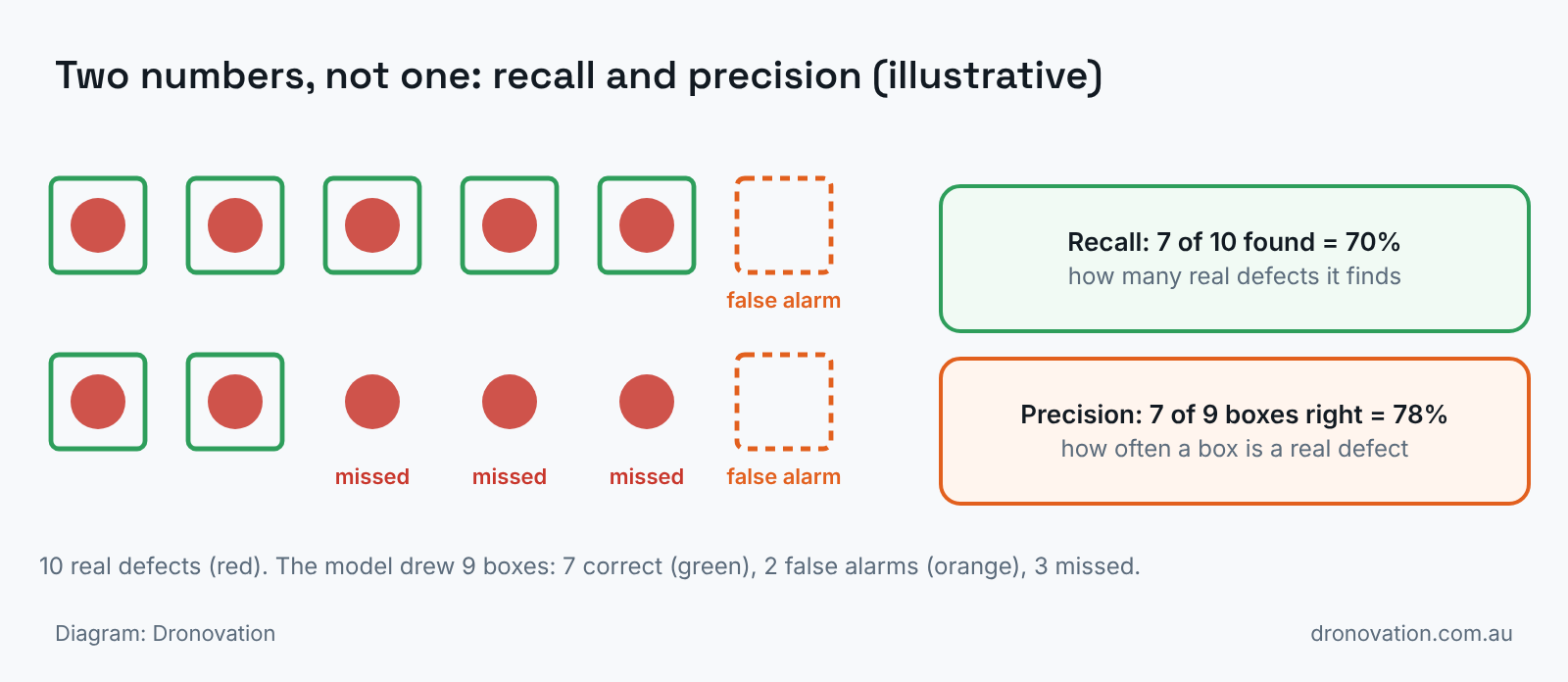
A single "95% accurate" figure tells you very little. Ask:
- Accurate at what? Finding defects (recall), or not raising false alarms (precision)? They trade off.
- On what data? Their own test set, or sites like yours?
- Per image or per defect?
- What does it miss? Every model misses things. Know which ones.
- Who checks the results? A person in the loop, or straight to the report?
A sensible setup
- AI finds candidates; people confirm before anything reaches a client report
- Every finding links to the original image, so it can be checked
- Confirmed and rejected findings are saved and used to improve the model
- Performance is measured on your own sites, and tracked over time
Where AI helps most
Not in replacing the inspector, but in removing the slog: going through thousands of images, measuring and locating each finding, and producing the report. That's where we focus in Lumina Inspect and Lumina Solar.